
Varanasi · Friday, September 18 · 6 min
A day at the loom with the kadhwa weavers of Madanpura
Why one motif can take an hour, and why we pay for the hour.
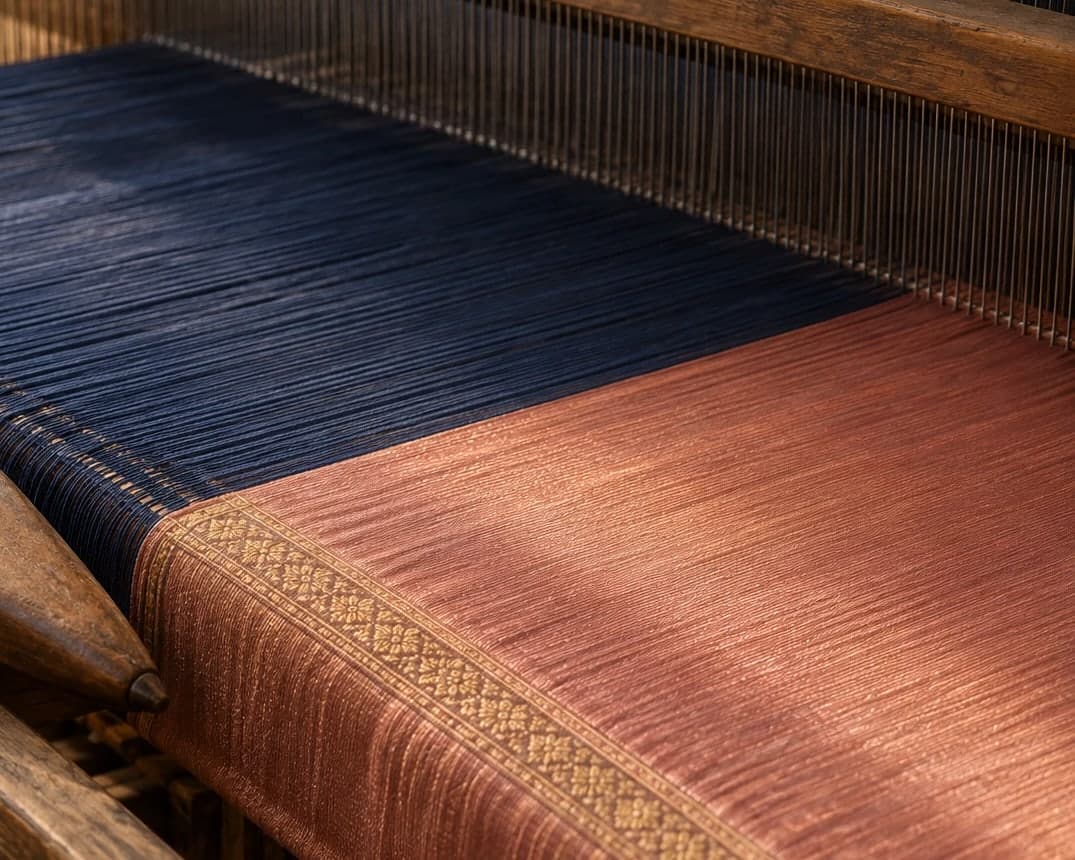
The loom is below the floor. That is the first thing you notice in a Madanpura weaving house: the weaver sits at ground level with his legs in a pit, feet on the treadles, the warp stretching away in front of him like a road. The pit keeps the silk humid and the weaver cool, and it has done both for as long as anyone here remembers.
Kadhwa is the slowest way to weave a Benarasi. In the common cutwork technique the zari runs across the whole width and the floats on the back are cut away afterwards. In kadhwa each motif is woven on its own, with its own small shuttle, and the reverse is as finished as the face. A paisley the size of your palm takes the better part of an hour. A saree with two hundred of them takes two people three weeks.
We pay for that time at a rate the weavers' cooperative sets, not one we negotiate down, and we pay for the silk and zari before the first pick is thrown. The alternative, the usual arrangement, is that the weaver borrows for materials and sells at whatever price clears the debt. It is the reason so many looms in this lane have gone quiet.
A portion of every sale comes back here as well. This year it is going on light: good lamps above every pit so weaving does not stop at dusk. Next year it may be a jacquard attachment, or school fees. The weavers decide.
When a Noor saree reaches you, its certificate names this lane and this craft. It is a small thing. It is also the whole point.