Kanchipuram · Friday, September 4 · 4 min
How to read a Kanjivaram border, from korvai to temple
The three joins that tell a real one from a printed one.
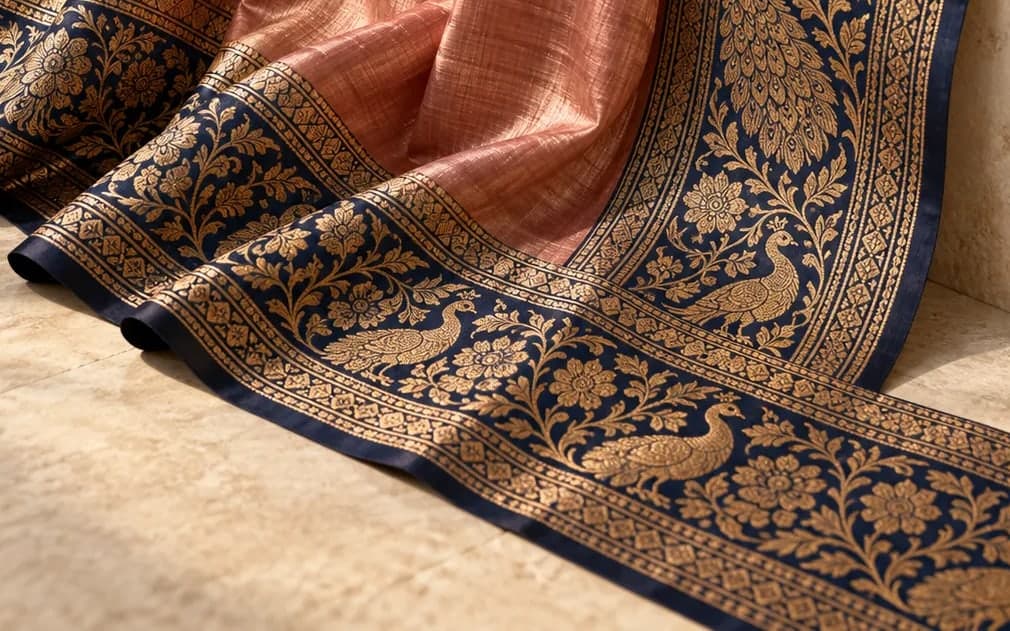
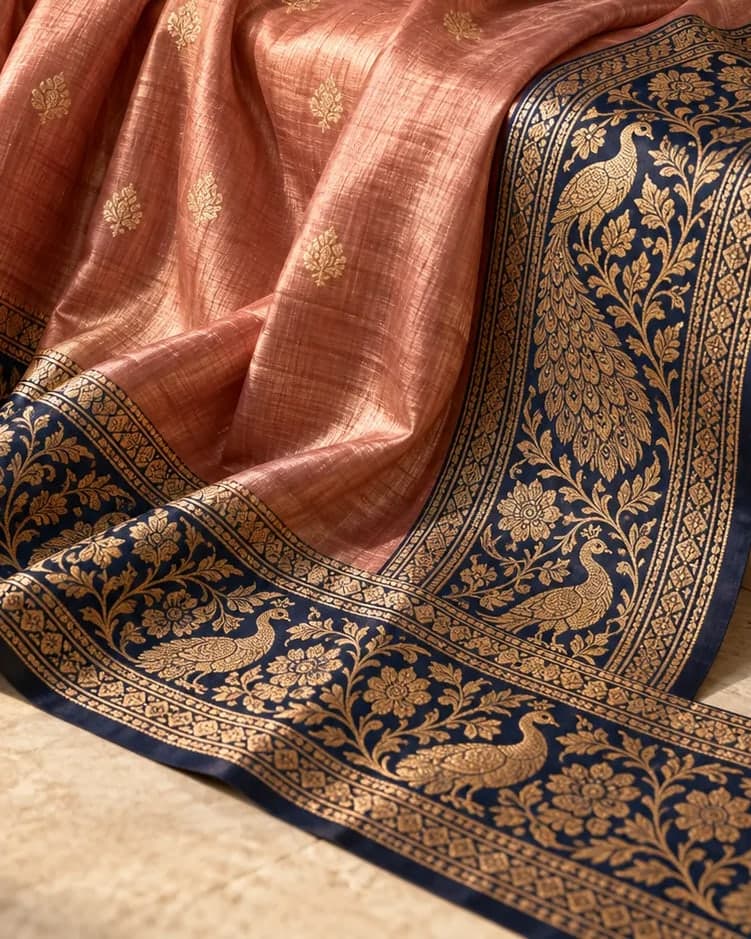
A Kanjivaram saree is three pieces of cloth pretending to be one. Body, border and pallu are woven in different colors, sometimes on different warps, and joined so well that the joins read as design. Learning to see them is the quickest way to tell a real Kanchipuram silk from a printed copy.
The first join is korvai. Where the body meets the border, look for a line of tiny interlocking loops: the border weft and the body weft have been looped around each other, thread by thread, by a second weaver sitting at the edge of the loom. On a copy the color simply stops, or bleeds, because it was printed.
The second is the pallu join, petni. Hold the saree up to the light where the body becomes the pallu. On a real one you will see a fine band where the warp threads of the body were twisted together with the warp of the pallu, so the two colors meet without a seam. It takes a day on its own.
The third is not a join but a shape: the temple border, rows of triangles that step up like a gopuram. On a handloom the triangles are slightly uneven, each one a decision. On a printed saree they are perfect, and that is how you know.
Our Meenakshi is woven with all three. Its certificate carries the Silk Mark, and the korvai was done by a second weaver at the edge of the loom.